



Throughout most of my tenure at the SoundStage! Network, I was living in a one-bedroom apartment in downtown Ottawa, Canada, where I did all of my listening in a decent-sized living room. Based on the simple fact that I couldn’t hear my neighbors through the walls, my older building seemed well constructed, and I appreciated how quiet it was. My place was large enough to accommodate a pair of Amphion Argon3L floorstanding speakers without the room becoming overloaded. However, it wasn’t so big that I felt I needed a subwoofer to flesh out the low end, so I never entertained the idea of owning one.
That changed in 2019. I took a job in Toronto and relocated to a suburb of Canada’s largest city. My new home was a house with a large, unfinished basement, which is where I set up my stereo. Initially, I was excited by the prospect of having so much space for listening to music. Having a high ceiling and being able to pull speakers well out into the room, far away from the walls, was appealing. Unfortunately, things that seem good in principle don’t always work in practice, and I found myself missing the intimacy of the confines of my old apartment, even if my new listening space afforded me a bigger soundstage.
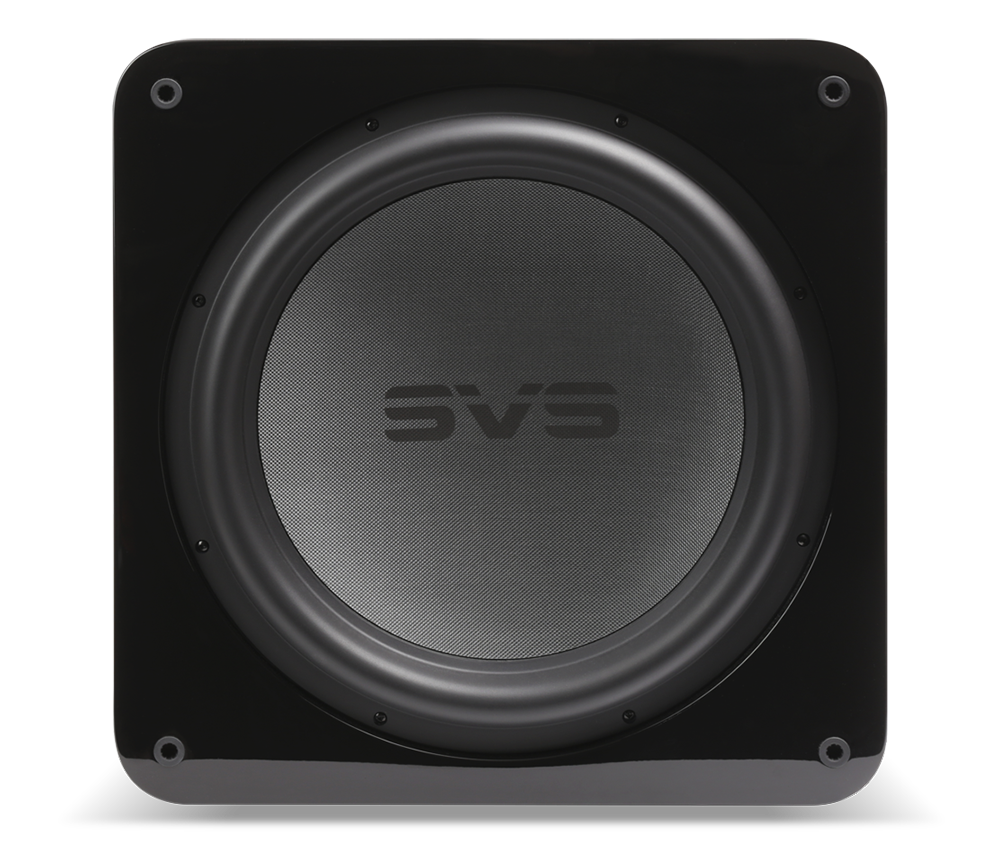
It quickly became apparent that part of what I was missing was the visceral vibe of hearing music in a smaller place. Although I came to realize there was no way that I could recreate the intimacy of my Ottawa apartment in my new listening space, I knew I could still enjoy the physical impact of music if I could just move more air. One way to do this was acquiring bigger speakers, but that wasn’t in my budget. The other way was to add a subwoofer, which I did by purchasing an SVS SB‑4000. That was a good decision, as it helped restore some of the scale and impact of what I was hearing.
A couple of months ago, SoundStage! founder Doug Schneider asked if I wanted to review SVS’s flagship sealed subwoofer, the SB17‑Ultra R|Evolution (US$2699.99, CA$4700, £3350, €3699). I don’t normally write about subwoofers for SoundStage! Hi‑Fi, but since I didn’t have anything else in the queue I was happy to accept the assignment. I didn’t know I was going to review a subwoofer that would be an even better match for my room than the SB‑4000, and that it would prove to be one of the most fun assignments I’ve taken on for this site.
Description
SVS’s SB17‑Ultra R|Evolution was announced in the fall of 2024. The product name and accompanying marketing material promised a significant jump in performance for a company that established its reputation by building market-leading subwoofers at prices that, in high‑end hi‑fi terms, represent good value.
SVS describes the SB17 as a quantum leap forward in design and performance. I’ll leave it to those who know more about subwoofer design to evaluate the validity of such a claim, but after comparing it with my own SVS SB‑4000, there’s no question that this model offers a big step up in performance.
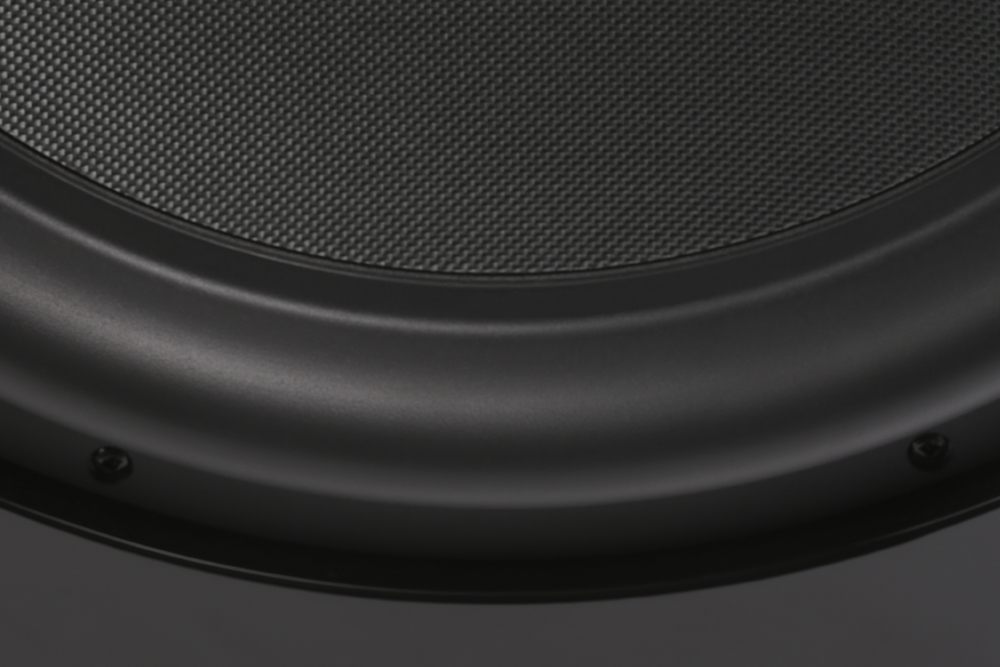
It starts with the driver itself, an all-new 17″ design that employs not one but two 8″ voice coils. The driver is constructed from a glass-fiber composite cone with a 55-pound (!) toroidal ferrite-magnet motor assembly. SVS boasts that this driver can play down to 15Hz while maintaining pinpoint accuracy and control. Dual voice coils are said to permit the stable transfer of energy from the motor to the cone. The voice coils use copper-clad aluminum wire that, according to SVS, offers ideal thermal capacity and magnetic-field strength.
The SB17 derives its power from a pair of class-D mono amplifiers with MOSFET output stages. Each amplifier drives a single voice coil, thus doubling the amount of current being fed to the driver. SVS’s Sledge STA‑2800D amplifier features a switched-mode power supply that generates 2800W of continuous power and can hit peaks exceeding 6000W. These are jaw-dropping numbers.
Dual Nomex suspension spiders permit high excursion, while dual high-temperature 25-strand copper-alloy and Nomex composite leads are woven through the spiders for clean electrical connections between the amplifier and voice coils. An injection-molded styrene-butadiene rubber surround permits pistonic motion from the driver for maximum accuracy and minimal distortion. The driver itself is mounted onto a 17″ powder-coated, cast-aluminum basket that boasts high rigidity, thus enabling good energy transfer from the amplifier to the cone.
Managing this power is a 295MHz Analog Devices Audio digital signal processor (DSP), boasting a more-than-fivefold increase in processing power over previous SVS subwoofers. The DSP is responsible for monitoring every function of the Sledge STA‑2800D amps to ensure clean voltage delivery to and from the power supply, while delivering the highest possible current to the SB17’s voice coils. This entails running sophisticated power-management algorithms and various monitoring systems to optimize AC voltage delivery to the power supply. A built-in AC line conditioner cleans up the incoming voltage by filtering out external electromagnetic and radio interferences that could degrade signal quality.
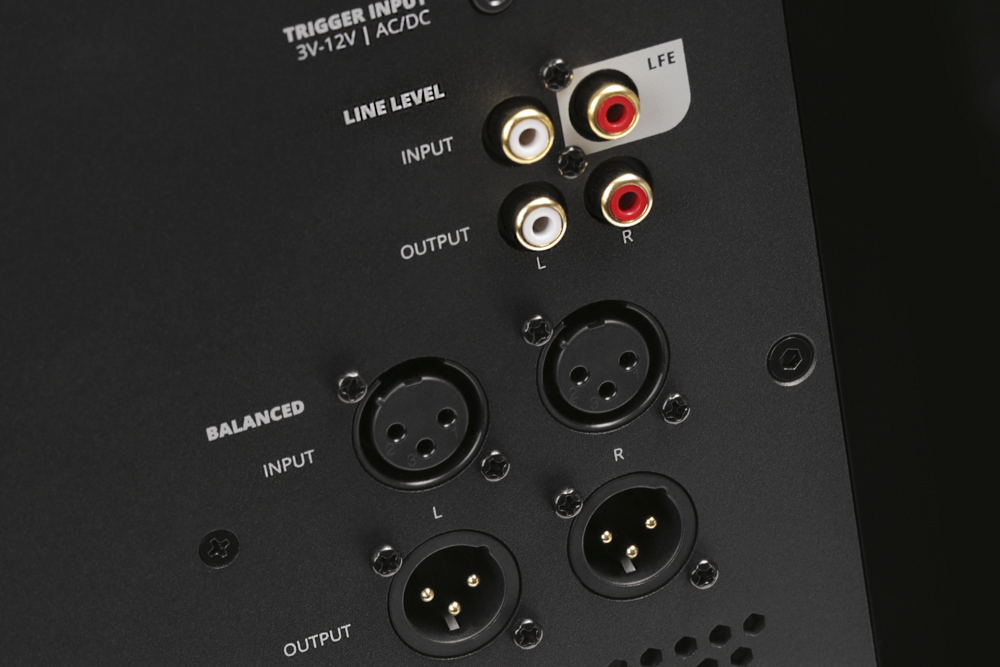
XLR and RCA stereo outputs permit flexibility for connecting to your system, while a USB input powers SVS’s optional SoundPath Wireless Audio Adapter, which can be purchased separately for those who don’t want to run a cable from their amplifier or preamp/processor to the SB17. An IR input facilitates integration with control systems, while a trigger input allows the sub to automatically turn on when the rest of your system powers up. When not in use, the SVS goes into a standby mode that consumes a mere 0.5W.
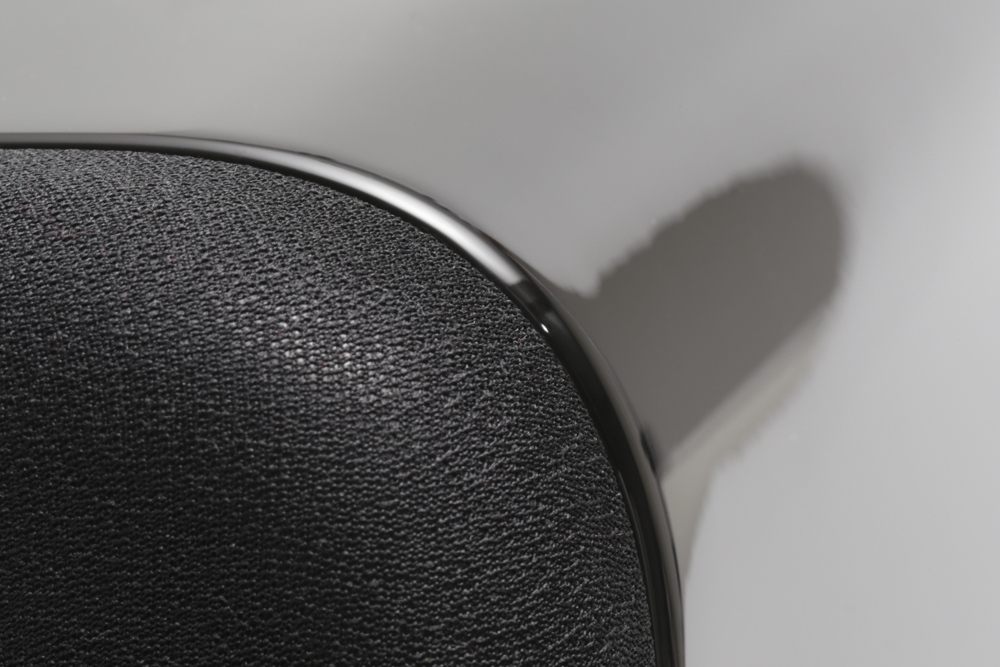
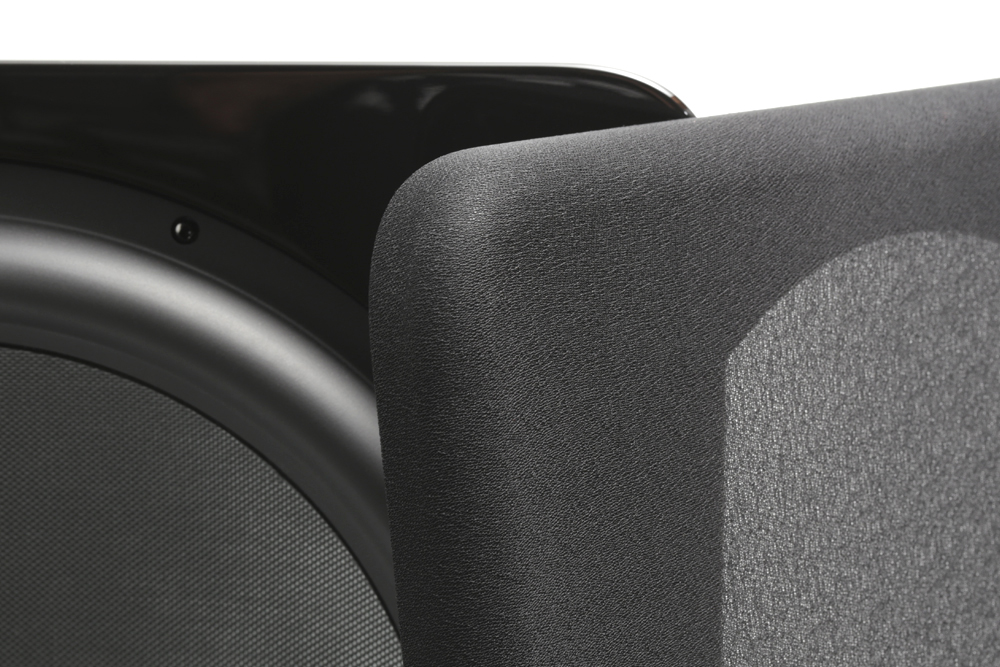
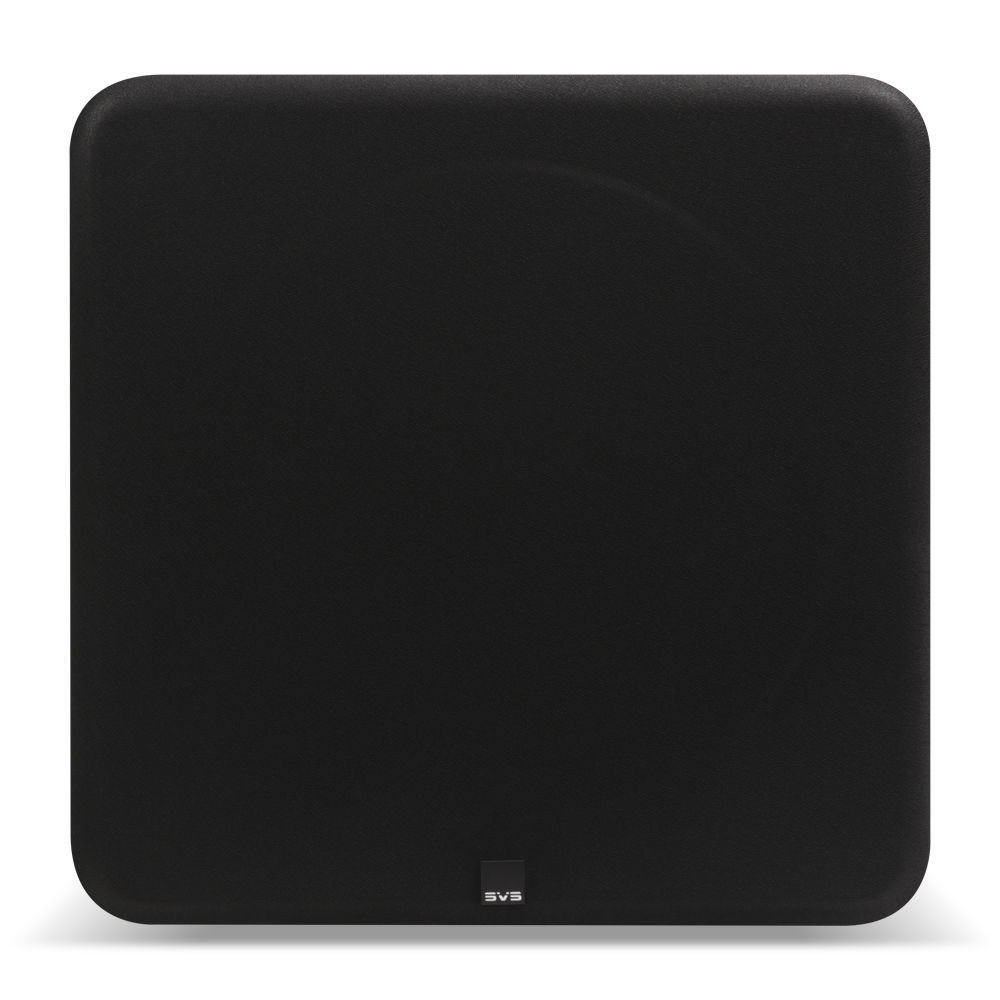
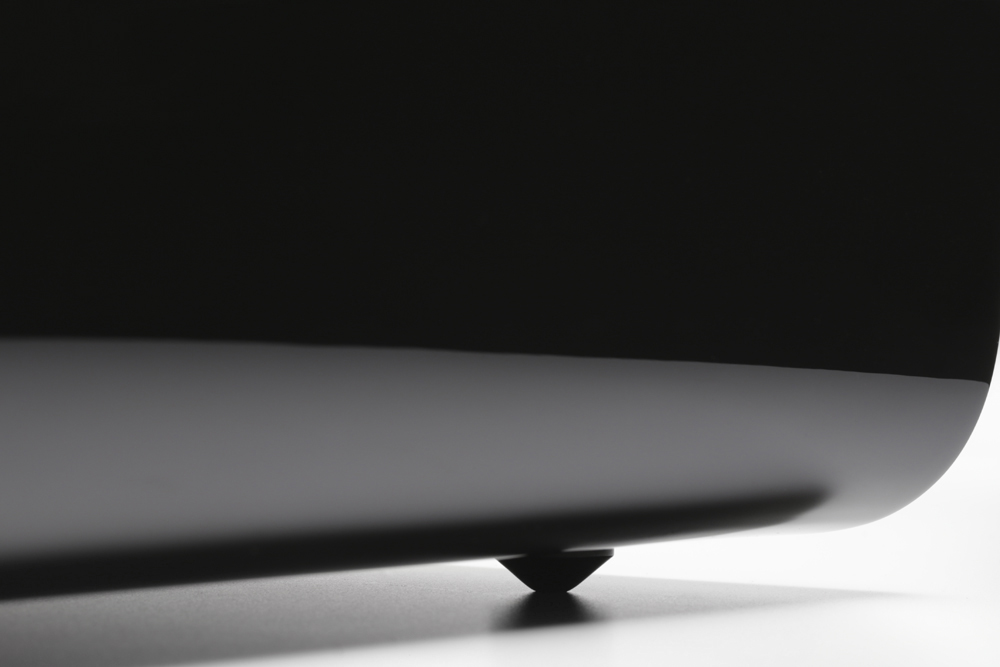
The SB17 weighs 124 pounds and measures 20″H × 19.5″W × 21.2″D with the grille installed. If you remove the grille, as I did, the depth is reduced by almost an inch. Two finishes are available: black oak veneer or piano-gloss black, the latter being the one I was sent for review. While I dislike piano-gloss black for its propensity to show dust and fingerprints, the finish did give the SB17 a more upscale look, befitting the sub’s flagship stature.
The highly reflective surface was well finished, and I like that SVS has abandoned the large display found on the front of some of their earlier generations of subwoofers, including my own SB‑4000. While it is useful to see the various settings (volume, low-pass filter, etc.) from one’s listening chair, I realized during my time with the SB17 that I didn’t miss the display. Eliminating it made the subwoofer look less busy, and I preferred the cleaner aesthetic. If you want to confirm that the settings you’ve made in the SVS control app have been applied the subwoofer, you only need look at its backside, where a small screen shows this information.
System and setup
The SB17 was connected to a Bryston BP‑19 preamplifier using generic RCA cables and inserted into a system fronted by a pair of Arendal Sound 1528 Monitor 8s that I’ve recently reviewed. AudioQuest Rocket 88 cables linked the Arendals to a Bryston 4B Cubed stereo power amplifier, which was in turn connected to the BP‑19 preamplifier using WBC‑Pro Quad balanced interconnects. Digital content came from a NAD C 565BEE CD player that was wired to a Bryston BDA‑2 DAC using an i2Digital X‑60 coaxial cable. Music was sent wirelessly from Apple Music on an iPhone SE to a Bluesound Node 2i streamer. I connected the Node 2i to the BDA‑2 using an AudioQuest Forest TosLink optical cable. The BDA‑2 was connected to the BP‑19 with WBC-Pro Quad XLR cables.
Vinyl playback came courtesy of a Thorens TD 160 HD turntable with a modified Rega Research RB250 tonearm and a Sumiko Songbird low-output MC cartridge. A Pro‑Ject Audio Systems Connect it RCA‑CC cable linked the Thorens to a Pro‑Ject Phono Box DS3 B phono stage, which was powered by a Pro‑Ject Power Box S3 Phono outboard power supply. The DS3 B was linked to the preamplifier using Kimber Kable Tonik interconnects. All electronics were plugged into an ExactPower EP15A power conditioner.
When the ported and sealed Ultra R|Evolution subwoofers were announced, SVS indicated that an automatic room-equalization function would be released via an over-the-air update for the SVS app. This room EQ function would allow users to take acoustic measurements of the subwoofer on a smartphone and automatically calculate equalization filters to optimize the subwoofer’s output at the listening position. At the time of writing this review, that update had not been released, so I used the six-band parametric EQ in the SVS app to fine-tune the SB17’s performance myself.
I began setting up the SB17 by level-matching it to my main speakers using pink noise played through Room Equalization Wizard software and captured by a UMIK‑1 microphone plugged into my Windows laptop. If you don’t own a microphone, I’d strongly recommend executing this step with a dedicated SPL meter, or at least with one that you’ve downloaded onto your phone. Just as an experiment, I attempted to level-match simply by listening to music and setting the subwoofer volume, but I wasn’t setting it loud enough. Basic measurements such as this are your friend if you want to integrate a subwoofer into your system properly.
The next step was to set the low-pass filter to determine what frequencies the subwoofer would reproduce. SVS recommends setting the crossover 10–15Hz above your speaker’s low-frequency extension limit. Arendal rates the Monitor 8’s frequency linearity (a blending of on- and off-axis measurements said to indicate response throughout the listening room) as 38Hz–20kHz (±2dB), so I set the SVS’s low-pass filter at 50Hz. I experimented with setting it as high as 80Hz, but found I was hearing the subwoofer too much. As much as I want a subwoofer to complement the music I’m playing, I never want it to dominate. If the subwoofer is calling attention to itself, that’s a problem. I realize that for many owners this is exactly the sort of thing they want, but for me it throws off the balance of the system and serves as a distraction. I’m not a bass head when it comes to music.
Next, I took some frequency response sweeps with the microphone at my listening position. In the audio band where the subwoofer was operating, this revealed a large peak at 26Hz and a smaller dip at 36Hz. Both of these frequency aberrations were also present in the output of the pair of Arendal speakers alone, indicating they were being caused by the room response, rather than originating from the speakers or subwoofer. However, adding the SB17 only served to further exaggerate both modes, so I used the six-band parametric EQ on the SVS app to try and tame them. I was able to reduce the size of the 26Hz peak by lowering the energy at this frequency by 10dB in the app. Similarly, by adding a 6dB boost at 36Hz, I was able to increase the output enough to produce a small shoulder that somewhat mitigated the loss of energy in this region. I’d be curious to see how well SVS’s room-equalization function would deal with these peaks and troughs in my listening room, but in the absence of this or other room-correction software, it wasn’t possible to further flatten the response in my room. It’s well known that rooms tend to dominate how systems perform below 300Hz, and mine is no different.
Seismic sonics
Once I was satisfied the SB17 blended well with the Arendal Monitor 8s, it was time to listen. My first observation is something I’ve noticed with my SB‑4000, namely that depending on the recording, a subwoofer may add little or nothing to what I’m hearing.
While it may not apply as much to movies, subwoofers can be subtle when it comes to music. You can’t miss something if you don’t know it’s there, and it wasn’t until I played around with the volume slider on the SVS app (something I did frequently) that it became obvious what the SB17 was or wasn’t contributing. This shouldn’t really come as a surprise. With the SB17’s low-pass filter set to 50Hz, I’d only tasked it with commanding the nether regions of my music collection, and many of my albums contain little or no information down there. However, when they did, the role the SB17 played was illuminating, and for me at least, brought meaningful benefits to what I was hearing.
For example, in an effort to test the SVS’s low-end prowess, I put on a recording of the Boston Symphony Orchestra, conducted by Charles Munch, performing Camille Saint-Saëns’s Symphony No. 3, the “Organ Symphony” (CD, BMG Classics 61387‑2). However, its impact was mostly heard in the big organ chords that open the final movement, which include some very deep pedal notes, and several more organ chords that follow. Through the SB17, the drone of the organ dug a little deeper, making it sound bigger than the Arendals could manage on their own and thus filling the room better. However, for the rest of this piece, the sub’s influence was less pronounced, as it wasn’t called on to do anything.
Moving on to “Where Is the Line?” from Björk’s Medúlla (CD, Elektra 62984‑2), Rahzel’s beatboxing had more impact with the SB17 engaged, producing a bigger sound. Still, the effect on this track was subtle, and if I didn’t have the luxury of a subwoofer to draw my attention to it, I’d never know anything was missing in the first place.
However, listening to Medúlla’s lead single, “Who Is It,” the effect of the SVS was undeniable, as it filled out the low end of the track and made it sound like a far bigger, more powerful spectacle. On “Hunter,” the opening track from Björk’s Homogenic (CD, Elektra E2 62061), the SVS’s contribution was anything but subtle. With the SB17 engaged, “Hunter” was an anthem of epic proportions, sounding far more powerful and physical than it did through the Arendals on their own. The bass that the SVS generated was fast and tight, starting and stopping instantaneously. The SB17’s driver may be enormous, but the monstrous amplifier and DSP controlled it masterfully.
This is what makes using a subwoofer so much fun. Whether you’re listening to a pipe organ in a grand cathedral, or assaulting your senses with rapid-fire electronic beats, hearing deep bass with a vice-grip level of control is as much a visceral experience as it is an auditory one, and it can make for exhilarating listening. This is exactly what the SVS did in my room.

While the contribution of the SB17 to Saint-Saëns’s “Organ Symphony” was somewhat underwhelming, there were other instances where it caught me off guard by making its presence known more than I’d anticipated. For example, I put on Elliott Smith’s New Moon (CD, Kill Rock Stars KRS 455) simply because I wanted to hear it and not really expecting much from the SB17. To my surprise, the opening notes of Smith’s acoustic guitar on “Going Nowhere” were warmer, and the instrument itself was fuller-bodied with the SVS in the chain. When I removed the subwoofer, those same notes sounded leaner, and the guitar’s woody resonance was less apparent; I preferred the added warmth and intimacy the subwoofer brought to this tune.
Listening to James Blake’s “Limit to Your Love” (LP, James Blake, Polydor B0015443‑01), the Arendals were commendable in providing a foundation for the track, but they were no match for the SVS. The sub helped dig that foundation even deeper, conjuring a more cavernous atmosphere to the music, and yielding sonics that were grander and more impactful. This was equally true on “To Care like You,” where the music ventured into the subterranean, filling the room so much that the music seemed to envelop me. I found myself thinking this is exactly why you buy one of these for music playback. It sounded more like live music, but without the bloat and sloppiness that I’ve too often heard at live shows. One of the things that makes going to a concert so much fun is the scale of the sound, which is far louder than anything I’d ever attempt (or want) in my listening room. There’s no denying the energy one feels listening to live music, and the SB17 was able to recreate that level of power effortlessly.
I suppose at some point it would be possible to push the SB17 outside its comfort zone, but I never got close. On “M.A.A.D City” from Kendrick Lamar’s Good Kid, M.A.A.D City (CD, Aftermath / Interscope B001753602), the impact of the SB17 was massive. On their own, the Arendals did a fine job energizing my listening room, but they came nowhere close to matching the tremendous power and impact of the music when the SVS joined in. From the first moments of the song, the bass can slam you in the chest, and the track was far more muscular with the SB17 in the chain. “M.A.A.D City” was produced to have a fat bottom end, something the SB17 generated without breaking a sweat. In fact, my room flinched well before the SVS did.
Just to hear what it could do, I maxed out the volume on the subwoofer on “M.A.A.D City” (it’s so easy to do this on the app), and the SVS was able to belch out some rumbles that elicited trembling in my room. It was almost frightening, as the bass was so completely overblown that I could only tolerate it for a few seconds before I had to dial it back. Throughout this sonic assault, the SB17 didn’t struggle, but it energized my room so much that I feared for the house itself. The sloppiness I heard wasn’t emanating from the SVS, but from the room, which was unable to handle the sheer volume of air that the subwoofer was pressurizing it with.
Comparison
I evaluated the SB17 against my SB‑4000 (discontinued, US$1799 when available). With its 13.5″ driver and Sledge STA‑1200D 1200W class‑D amplifier, the SB‑4000 is big and powerful in its own right. Measuring 18.3″H × 17.8″W × 18.6″D (without grille) and weighing just over 102 pounds, the SB‑4000 is hardly small, and only looked diminutive when placed next to the SB17.
It didn’t take long to hear that the difference in their appearances also extends to how each subwoofer sounds. Swapping out the SB‑4000 for the SB17 was more revelatory than I’d expected, and it took almost no time to recognize that the sheer output of SVS’s newest flagship sealed subwoofer was a better match for my room. Don’t get me wrong: the SB‑4000 can move a lot of air and produce a strong bottom end to provide a more solid foundation for music. However, the SB17 was able to energize the room in a way my own subwoofer couldn’t, producing thunderous bass at much higher volume than its smaller sibling.
Going back to “M.A.A.D City,” both subwoofers were able to produce impressively clean low end, but the SB17 was vastly more powerful than the SB‑4000. Through the SB17, the sound was far more voluminous, filling the room more effortlessly than through the SB‑4000.
The same was true on Björk’s “Hunter,” where the tremendous output of the bigger subwoofer increased the scale of what I was hearing, producing a more immersive atmosphere. Compared to “M.A.A.D City,” the bass on “Hunter” is more athletic and demands a high level of control over the sub’s driver in order to remain composed. I can’t say that the SB17 was tighter or cleaner than the SB‑4000, but given that it uses a much bigger driver, the fact that it sounded as fast as my own subwoofer is a compliment in itself.
If it were within my budget to do so, I’d sell my SB‑4000 and purchase the SB17. Its extraordinary output was far better at filling my listening room, and despite being able to move a lot more air, there was zero penalty with regard to the control it had over the deepest frequencies.
Conclusion
If I could only say one thing about what SVS’s SB17‑Ultra R|Evolution did for listening to music on my stereo, it’s this: I liked everything the subwoofer added to what I was hearing, and in every case, I preferred the sound with the SB17 in my system. Period.
I didn’t assess how the SVS performed with movies, but music is a more credible litmus test for me. Thankfully, I have no idea what plane crashes and explosions sound like in real life, but I’ve seen Kendrick Lamar and Björk in concert, so I know how live music should sound. The SB17 was better able to conjure the scale of a live show, albeit with far cleaner sound than I’ve ever heard at a concert. Time and again it acquitted itself wonderfully across numerous records and CDs, making it the perfect companion to my music collection.
. . . Philip Beaudette
philipb@soundstagenetwork.com
Associated Equipment
- Speakers: Arendal Sound 1528 Monitor 8
- Subwoofer: SVS SB‑4000
- Preamplifier: Bryston BP‑19
- Power amplifier: Bryston 4B3
- Digital sources: NAD C 565BEE CD player, Bryston BDA‑2 DAC, Bluesound Node 2i streamer
- Analog source: Thorens TD 160 HD turntable, Rega Research RB250 tonearm, Sumiko Songbird MC cartridge
- Phono stage: Pro‑Ject Audio Systems Phono Box DS3 B and Power Box S3 Phono outboard power supply
- Speaker cables: AudioQuest Rocket 88
- Interconnects: WBC‑Pro Quad XLR interconnects, Pro‑Ject Connect it Phono RCA-CC, Kimber Kable Tonik (RCA), generic RCA
- Digital links: Esoteric Audio (coaxial), i2Digital X‑60 (coaxial)
- Power conditioner: ExactPower EP15A
SVS SB17-Ultra R|Evolution subwoofer
Price: US$2699.99, CA$4700, £3350, €3699
Warranty: Five years, parts and labor
SVS Inc.
260 Victoria Road
Youngstown, OH 44515
Phone: 1-877-626-5623
Website: www.svsound.com
