Note: for the full suite of measurements from the SoundStage! Audio-Electronics Lab, click here.
 Reviewing an amplifier—whether integrated or separates—using only one pair of speakers in a single room no longer strikes me as sufficient. The interaction between amplifier, loudspeakers, and listening environment fundamentally shapes what we hear. We never experience an amplifier or a pair of speakers in isolation; what reaches our ears is the combined, in‑room result of an amplifier controlling a specific loudspeaker within a specific acoustic space.
That realization led me to evaluate Simaudio’s Moon 371 streaming integrated amplifier differently from most products that pass through my system. Instead of limiting the review to one setup, I used the 371 with three very different pairs of loudspeakers across two rooms of markedly different size and acoustic character. The goal was simple: to understand not just how this amplifier operates under ideal conditions, but how consistently it performs across the kinds of real‑world systems and spaces listeners actually use.
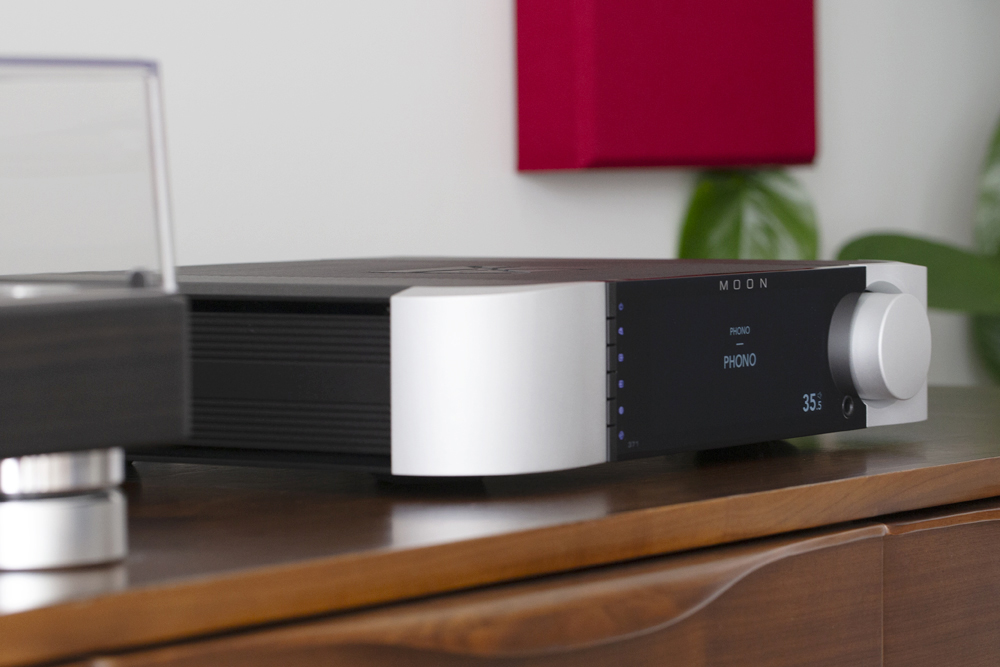
Priced at US$6500, CA$8800, £6250, or €6800, the Moon 371 represents Simaudio’s latest effort to combine substantial power, comprehensive digital capability, and a high‑quality phono stage into a single décor‑friendly chassis. It is also the first amplifier from the company to employ switch‑mode technology in the power supply—a design choice that signals both technical ambition and a clear recognition of how modern hi‑fi systems are evolving.
Description
In 2023, Simaudio introduced a series of components dubbed the North Collection: the Moon 761 and Moon 861 power amplifiers, the Moon 791 and Moon 891 streaming preamplifiers, the Moon 681 streaming DAC, and the Moon 641 integrated amplifier. The North Collection was—and remains—the company’s flagship series.
Last fall, Simaudio launched the Moon 371, currently the only product in the company’s newest series, called the Compass Collection. There’s no word yet on future Compass Collection products, but the 371 sets the stage as a feature-rich integrated amplifier with a phono stage suitable for moving-magnet (MM) and moving-coil (MC) cartridges, a DAC, and the company’s MiND (Moon intelligent Network Device) streaming platform.
The 371 can be connected to your network via ethernet or Wi‑Fi, which is how I used it. Ethernet is the more stable connection method, but aside from a handful of occasions when either a phone or the 371 had to be powered off and back on because of a lost connection—par for the course with modern wireless products—it worked reliably over Wi‑Fi during the several months the 371 was being evaluated.
One word of advice, though: even if you don’t plan to use its streaming features—such as Apple AirPlay, Tidal Connect, Qobuz Connect, and Spotify Connect, all of which it supports—you should still connect the 371 to your network, as firmware updates are delivered through that connection. One update during the review period added useful features not present at launch, including the ability to set a maximum volume level, a safeguard I appreciate because it can prevent accidental speaker damage. Also, if the 371 is not connected to a network, it repeatedly searches for one. If you switch to the phono input while the unit is unconnected, you can literally hear it searching: a repeating sputtering sound is audible through the speakers. Once the 371 is connected to a network, the searching—and the sputtering—disappear.
I attended the official press launch for the Moon 371 last fall and heard Simaudio CEO Thierry Dufour and product director Dominique Poupart speak about its design. They’re your typical low-key engineers, more interested in substance than marketing gloss, but at this event they were especially proud to talk about the hybrid power supply at this amplifier’s heart. It is mostly a switch-mode power supply (SMPS) that has been designed in-house, but it has power-factor correction at its input and linear regulation, the latter being why they call it a hybrid design. Simaudio has used SMPS technology in preamplifiers and DACs for years, but this is their first amplifier to use the tech—a development that required significant engineering time, because the requirements of a power amplifier are far more complex than those of a line-level component.
The result of their team’s work, they said, is a stable class-AB amplifier capable of delivering 100Wpc into 8 ohms or 200Wpc into 4 ohms (both figures were exceeded in our lab measurements). Just as importantly, the power supply is said to provide a low-noise environment inside the chassis, which, in turn, allowed Simaudio to incorporate a high-performing phono stage—something the company could not include in the North Collection’s 641 integrated amplifier, which uses a traditional linear power supply with a large transformer that generates more internal noise than a quality phono stage would tolerate.
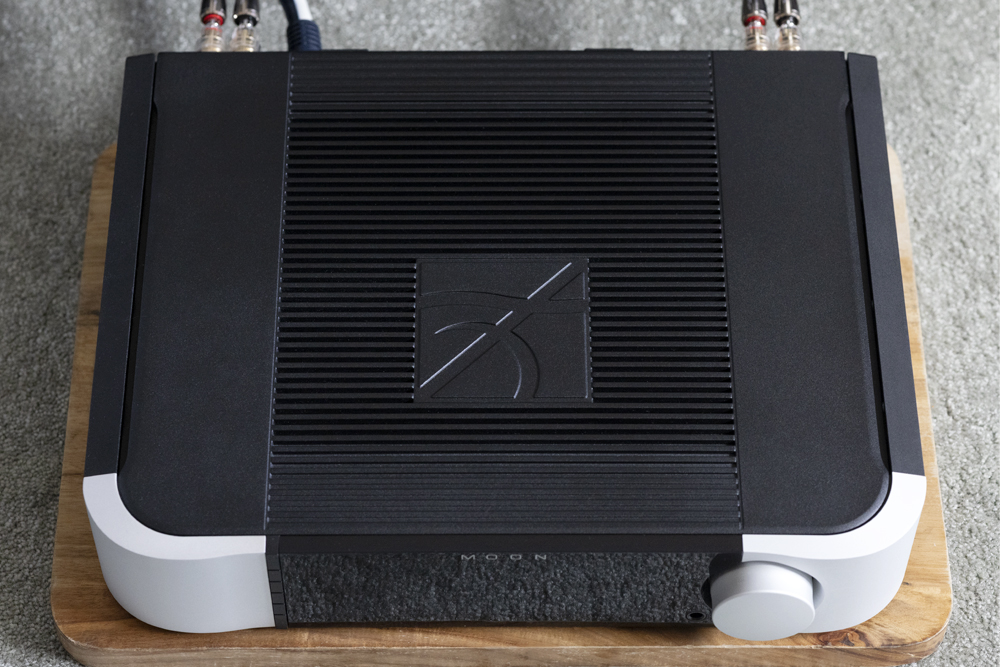
The 371 also incorporates what Simaudio calls Moon Distortion-Cancelling Amplifier (MDCA) technology in its amplifier stage. MDCA was introduced in the North Collection amplifiers to replace the traditional negative feedback employed in most amplifiers to reduce distortion. Dufour developed the system, and although it can be loosely described as a feedforward-type error-correction system—a shorthand explanation that makes it easier to understand—both he and Poupart were quick to point out at the press event that it’s not exactly that.
In terms of size, the 371 is relatively compact given its power-output capability, measuring 3.5″H × 16.9″W × 15.2″D. At just under 20 pounds, it’s also light—largely due to the SMPS technology (with most amplifiers, a substantial portion of the weight comes from the transformer used in a linear power supply)—though it feels sturdy.
Dufour and Poupart were just as enthusiastic about the phono stage, which they described as being of exceptionally high quality for the 371’s price, a balance achieved partly by omitting some adjustment features found in Simaudio’s standalone phono stages and North Collection preamplifiers. As a result, gain for MM and MC cartridges is fixed at 40dB and 60dB, respectively, and there are no provisions for impedance or capacitance adjustment, so you must use the stock settings: 47k ohms impedance and 100pF capacitance for MM, and 1k ohms impedance and 0pF capacitance for MC. Those values are quite common.
I used the phono input with a Denon DP‑3000NE turntable and DL‑103o cartridge, a low-output moving-coil design, and it performed well. The only feature I wish the 371 included is a rumble filter to attenuate the lowest frequencies—something that would have helped with one set of speakers I used, for reasons discussed later. Still, adherence to the RIAA equalization curve—as evidenced by our lab measurements for both cartridge types—is outstanding, which means the phono stage is very accurate, as well as low noise. When I swung the volume wide open with no music playing, I found it just as quiet as a good external phono stage.
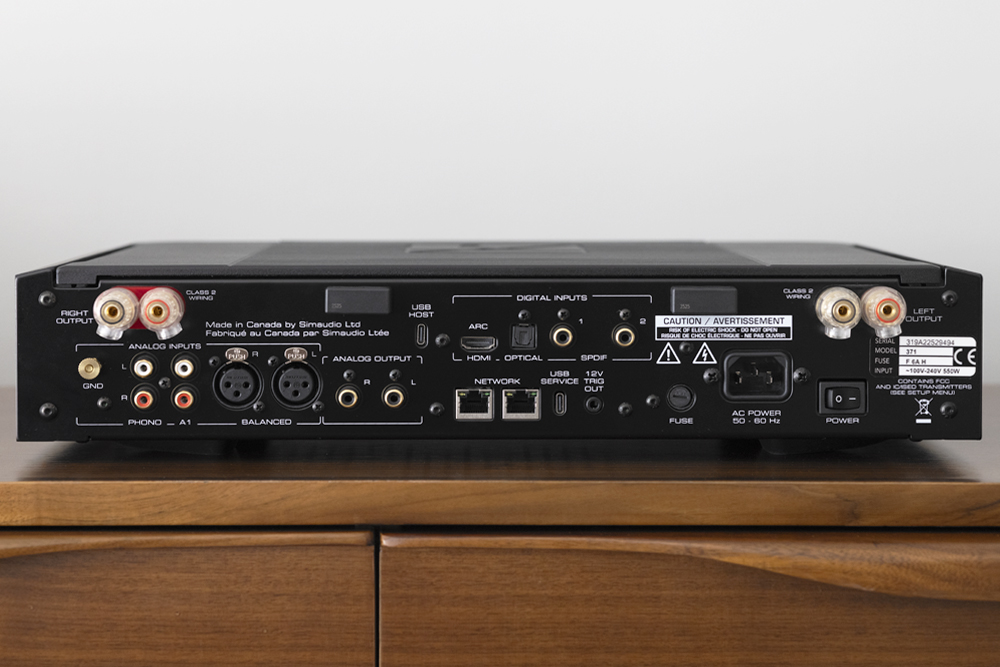
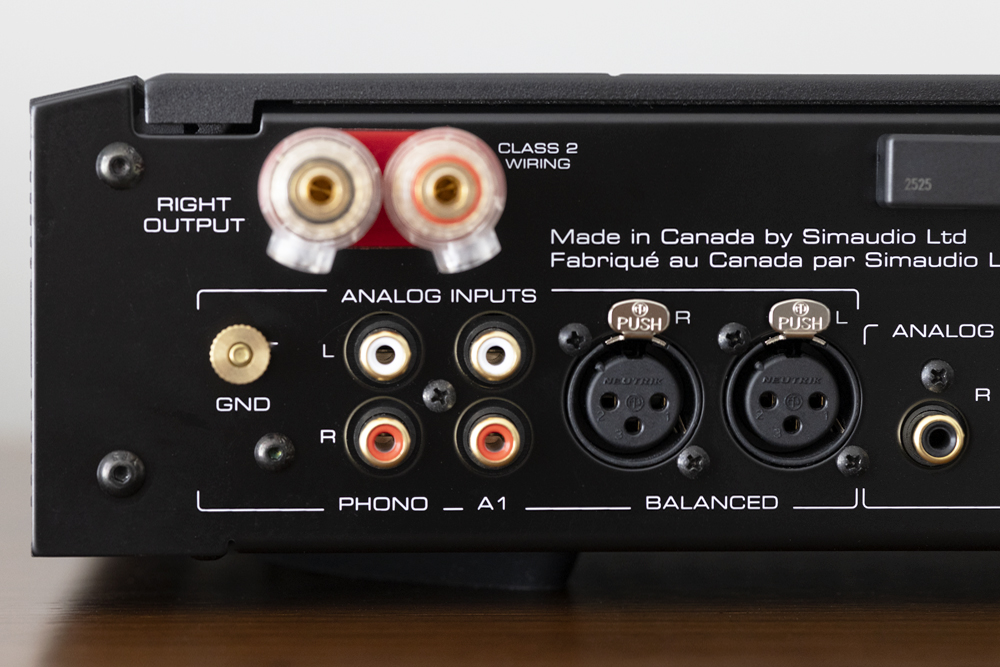
The DAC section is based on an ESS Technology chipset, though the company is careful to emphasize that implementation matters as much as the chipset itself. The 371 includes two coaxial S/PDIF inputs (RCA), one optical S/PDIF input (TosLink), one HDMI‑ARC input, and two ethernet ports—one input and one output, allowing daisy-chaining to another network device.
One omission in the digital-input section is a USB audio input, though you can see two USB‑C ports on the rear panel; one is for attaching an external drive, as described below, and the other is reserved for service.
Also on the back panel are single-ended phono inputs (RCA) and two sets of line-level inputs—one single-ended (RCA) and one balanced (XLR)—plus one set of preamplifier outputs (RCA). There is also a 1/4″ headphone jack on the front panel. I didn’t test it because evaluating headphone amplifiers isn’t something I normally do, but we did measure it in the lab.
Working alongside the digital circuitry is the MiND streaming platform, which connects to popular streaming apps and also allows you to play music files from an external drive, provided it’s formatted as FAT, NTFS, Ext2, Ext3, or Ext4. MiND supports the highest file-playback resolutions: up to 384kHz PCM and DSD256. The coaxial, optical, and HDMI inputs support PCM only and top out at 192, 96, and 48kHz, respectively.
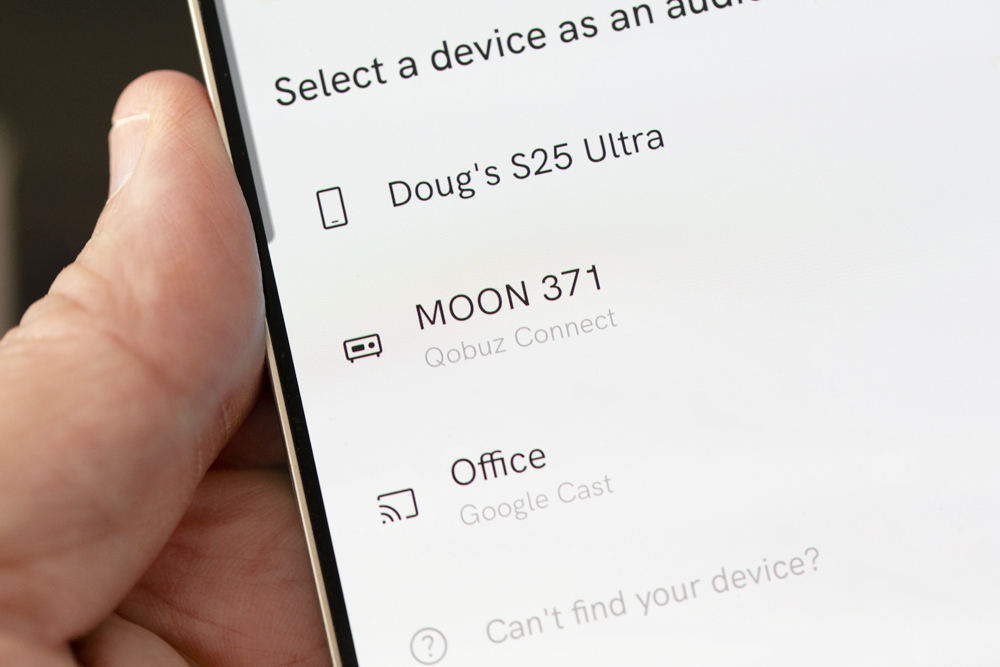
I used the MiND app itself for streaming, though I didn’t find it quite as intuitive as the native Tidal, Spotify, or Qobuz apps I typically use, even though Simaudio has continually refined it. Thankfully, besides AirPlay, MiND supports Connect for all three services, the importance of which shouldn’t be underestimated nowadays. My wife, for example, won’t stream music to any component unless she can use the Tidal app to do so—it’s what she knows and prefers—meaning Tidal Connect has to be there. For Roon users, the 371 is certified Roon Ready.
The Moon 371’s styling follows the North Collection aesthetic, with predominantly all-metal construction and the company’s familiar “cheeks” flanking the large front-panel display. I prefer this newer look for two reasons. First, the cheeks are bead-blasted extruded aluminum finished in matte-gray anodizing, so they are less flashy than the polished solid aluminum used for the North Collection models. Second, they sit flush with the rest of the chassis instead of sticking out slightly as they do on the North models, which I think looks more elegant.
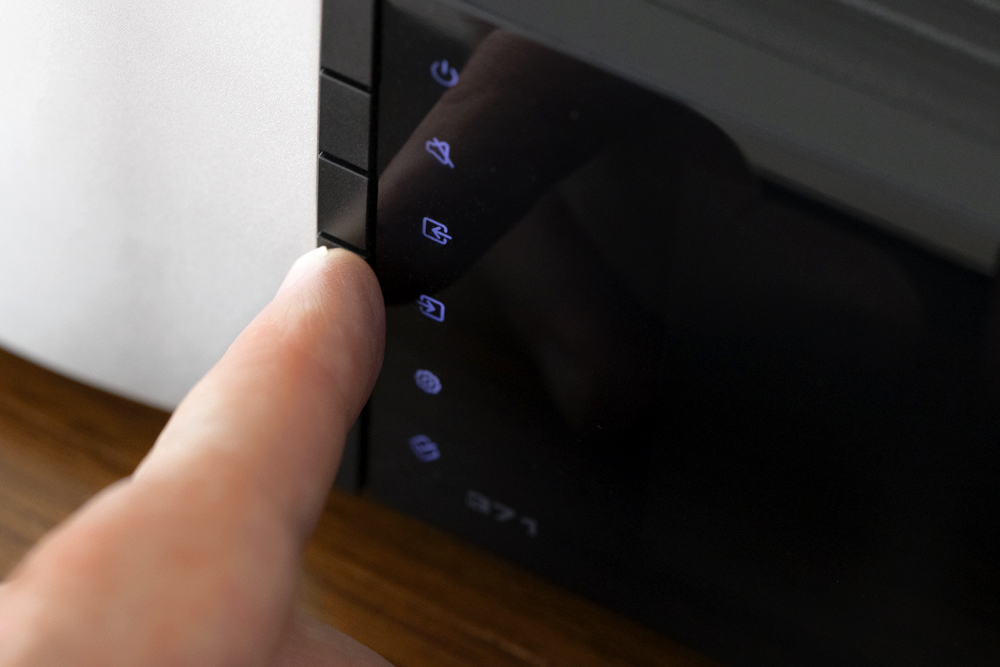
I also prefer the 371’s clear buttons running vertically along the left side of the display over the standalone metal buttons flanking the North Collection components’ displays. All told, the 371’s aesthetic is more understated and, to my eyes, more attractive.
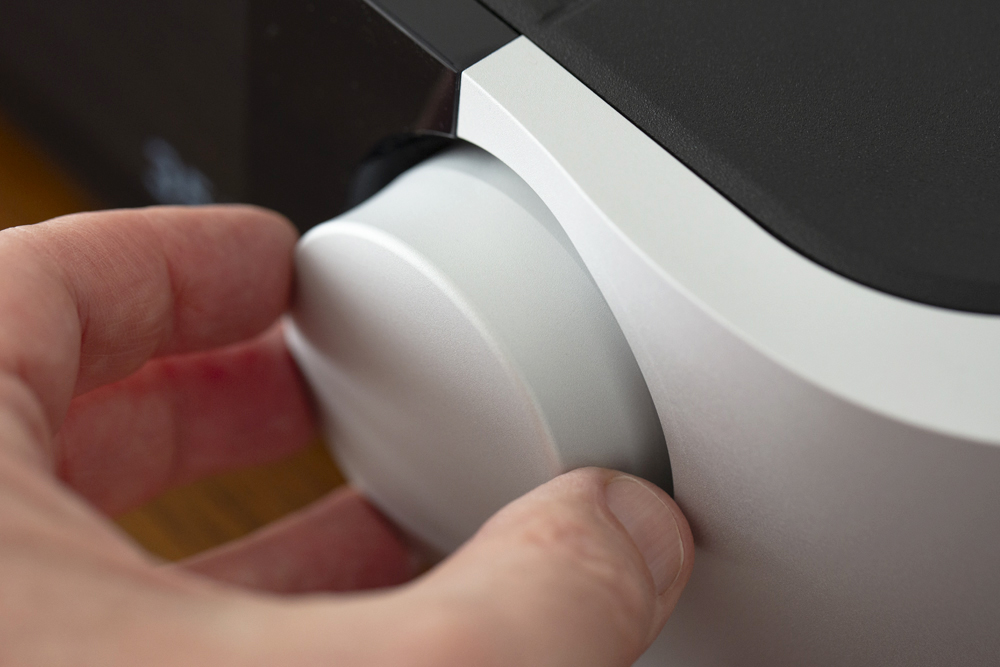
The 371 also has a very satisfying-feeling volume control that, like the cheeks, is made of anodized cast aluminum. It doesn’t feel quite as sophisticated as the North Collection volume knobs, but it has a reassuring weight and just the right amount of resistance. That matters, because the volume control is typically the control a user interacts with the most.
That is, unless you rely entirely on the remote control or the MiND app to adjust volume. The 371 comes with the CRM‑4, a new remote design that, as compact remotes go, gets the job done. But it pales in comparison to the beautiful BRM‑1 remote control that comes with North Collection components. Just look at the BRM‑1 if you haven’t already—you’ll probably drool over its sculpted shape, integrated volume knob, and small display screen. The good news is that if you want the BRM‑1, you can upgrade to it. The bad news is that it’s a pricey upgrade—about US$1000—so it’s hard to say how many buyers will spring for it.
One thing unchanged from the North Collection, however, is the warranty: a laudable ten years, which is at least twice the length of what’s provided on most components these days. Also, like all Simaudio components, the Moon 371 is manufactured in Canada at the company’s factory in Boucherville, Quebec.
Room 1 with Arendal Towers
For components I review as part of this System One column, I typically stick to listening in one room—my living room, which measures about 16′W × 18′D with an 8′ ceiling. That’s because the direction of this column is to review products applicable to a living-room environment, both in terms of appearance and performance. But I wanted to stress-test the 371, so I first used it in my main listening room, which is about 36′D with an 8′ ceiling, though I use only about half its length for the listening area, which is roughly 18′W.
It was in this large space where I used a pair of Arendal Sound 1528 Tower 8s, which approach 90dB sensitivity (2.83V/m) but hover around 4 ohms in the bass, so that they present a demanding load to the amplifier. The 1528 Tower 8s can play loud, and they favor amplifiers that deliver at least 200Wpc into 8 ohms, which the Moon 761 power amplifier provides—and I use the 761 to drive them to sometimes insanely loud listening levels. The 761 alone sells for $14,000 in the US, and it requires preamplification and other source electronics ahead of it. The companion 791, which I often use with the 761, includes a streaming DAC section and phono stage. It costs $16,000 in the US.
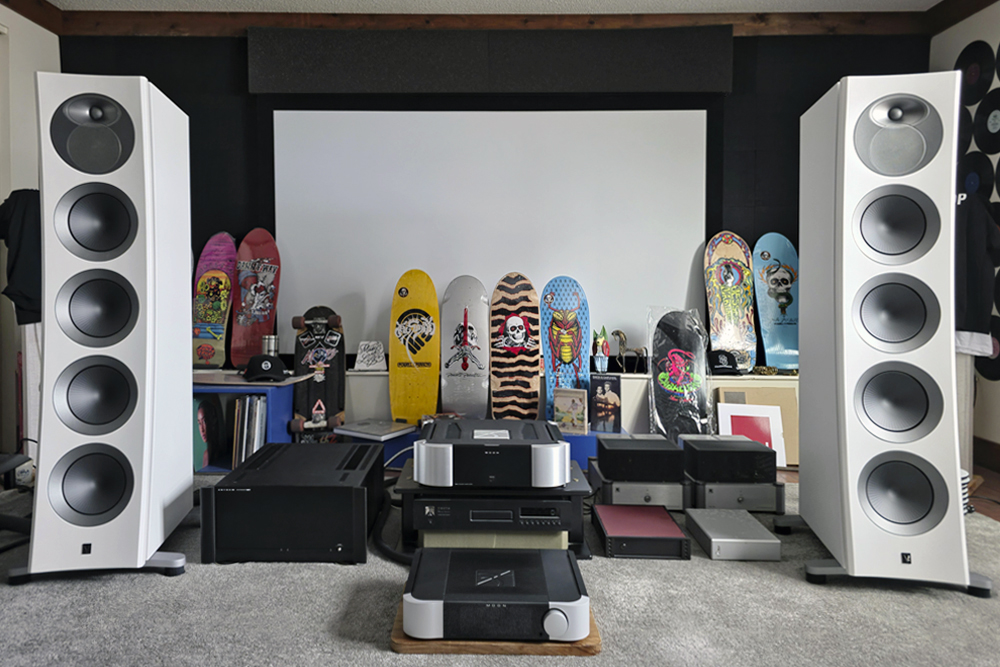
There was no vinyl playback in this setup; instead, I streamed via Wi‑Fi from Qobuz, drawing from a core group of reference recordings I know extremely well. Garden-hose-sized QED Supremus speaker cables (now replaced by Supremus Zr, but sold for about US$2500 per 3m pair when available) connected the 371 to the speakers.
I played Bruce Cockburn’s “Pacing the Cage” from The Charity of Night (16‑bit/44.1kHz FLAC, True North Records), Emmylou Harris’s “Orphan Girl” from Wrecking Ball (Deluxe Edition) (24/44.1 FLAC, Nonesuch Records), Cowboy Junkies’ “Mining for Gold” and “Misguided Angel” from The Trinity Session (16/44.1 FLAC, RCA Records), Ani DiFranco’s “Everest” from Up Up Up Up Up Up (16/44.1 FLAC, Righteous Babe Records), and Fleetwood Mac’s “Dreams” from Rumours (16/44.1 FLAC, Warner Bros. Records), among others. These are songs whose tonal balance, spatial cues, and dynamic nuances are deeply familiar to me, making them reliable tools for assessing changes in amplification, loudspeaker interaction, and overall system performance.
At normal to loud listening levels—loud meaning that if I spoke loudly to someone nearby they’d have to nudge the volume down to hear me—I heard essentially the same presentation I get from the 761 driven by a good preamplifier (either the companion 791 or an Anthem STR preamp fed by a Bluesound Node Icon streamer, which I’ve also been using with the 761). The sound was clear and clean throughout the audioband, with naturally extended high frequencies and bass that was impactful and as deep as I’ve heard (“Misguided Angel” remains my test for assessing the lowest frequencies).
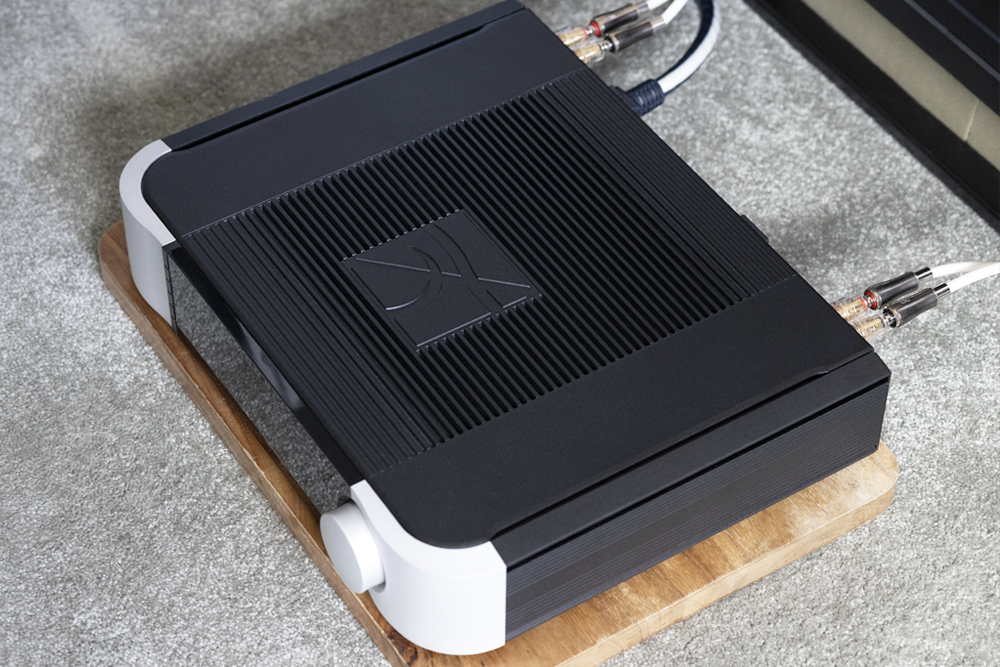
It was only when I pushed the volume level sky-high that I discovered the 371’s limits. In fact, one day I accidentally swung the volume wide open for a few seconds and heard a harsh sound indicating that the amplifier was clipping. In contrast, I’ve driven the Tower 8s much louder with the 761 and never heard a hint of distortion from the amplifier or speakers. Still, within sane limits, the 371 did an excellent job of controlling the 1528 Tower 8s in my exceptionally large room, though it certainly wouldn’t be my first choice for a system like this in a room of this size. The 791 and 761—and components like those—still have their place.
Room 2 with different Arendal Towers
The 1528 Tower 8s were too large and heavy to move easily into my living room—each is almost 5′ tall and weighs about 175 pounds—but around the time I finished assessing the 371 in my reference room, a pair of Arendal Sound 1610 Tower 8s arrived. The 1610 Tower 8 is what I’ve been calling a “roughly two-thirds the size and price” version of the 1528 Tower 8—the 1528 Tower 8 sells for US$10,900/pair, and the 1610 Tower 8 for US$7600/pair. We have not measured the 1610 Tower 8 as I write this, but Arendal’s published specifications—which have proved accurate for other Arendal speakers we’ve measured—suggest similar sensitivity and impedance to the 1528 Tower 8, making them similarly demanding.
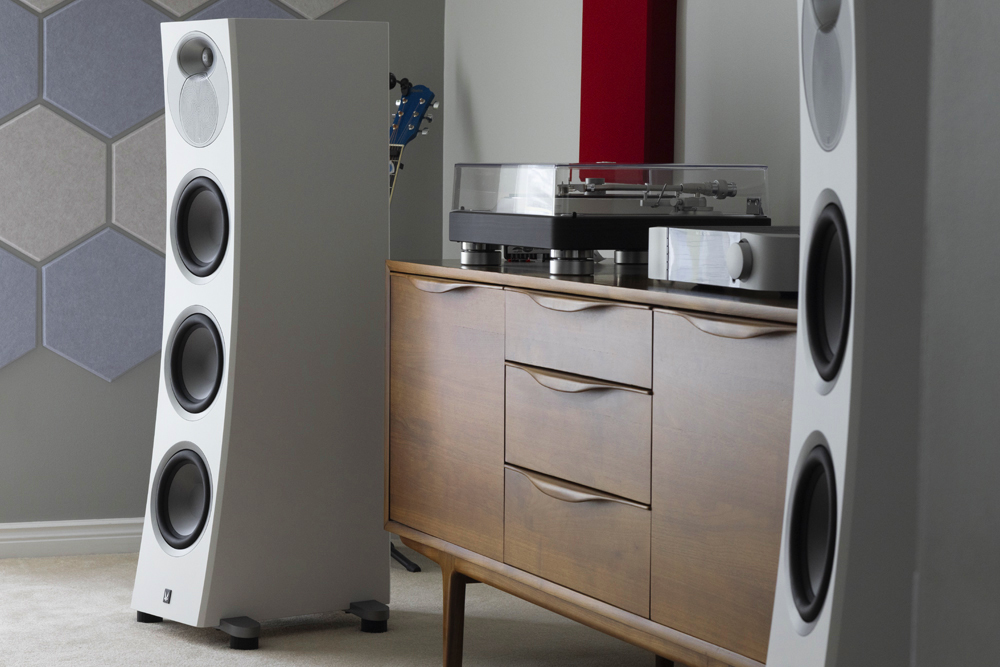
In this much smaller room—just under half the total size of my reference room—and with low-cost QED XT25 speaker cables (under $200 in the US for a 2m pair), which I also used with the other speakers mentioned below, the 371’s power output was more than sufficient. Its volume control tops out at 80, and the highest I reached was 65, with no audible distortion.
I played the same group of tracks and reached similar conclusions—clean across the audible range, with deep, tight bass—but in this setup I also played vinyl using the aforementioned Denon DP‑3000NE turntable fitted with a DL‑103o cartridge, with the Denon-supplied phono cable connecting to the 371. My vinyl auditioning included evaluating the test pressing of Martin Verrall’s C/O the Brain (SRMH‑001)—the first release under our SoundStage! Recordings label—before it went to final production. As a result, this system served as an evaluation tool not only to determine whether the tonal characteristics of the original recording had transferred successfully to the vinyl, but also to detect any pressing flaws, so the resolution had to be there. In short, I trusted what I could hear from it.
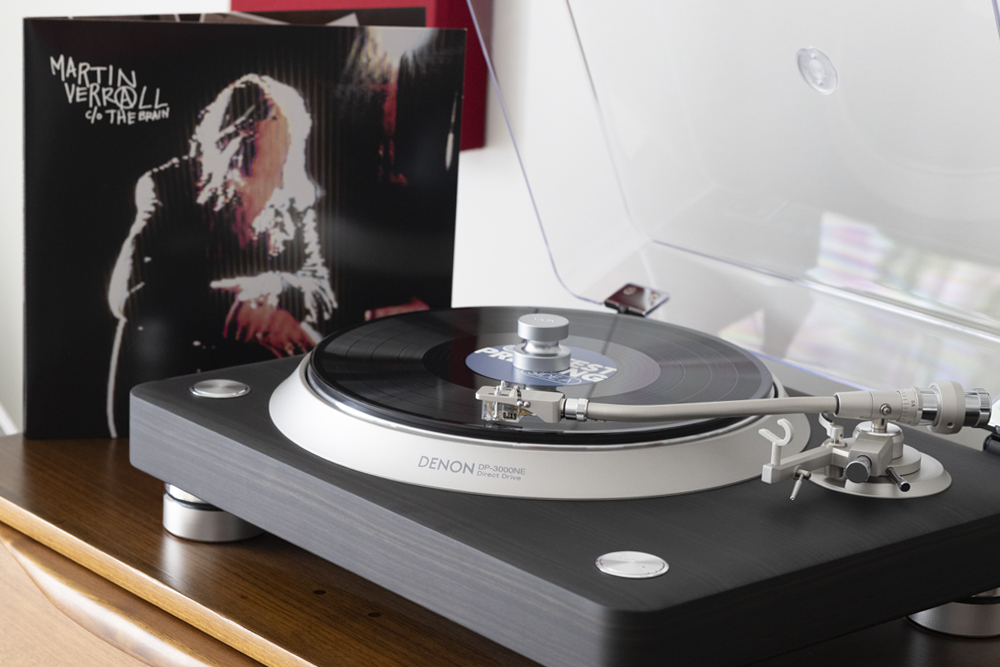
The 371’s accurate phono stage and the 1610 Tower 8s being near-full-range speakers reduced guesswork, and what stood out mostly was the clarity of presentation. As I listened intently to all eight tracks, every nuance was plainly audible. No one will be wanting for detail after listening to this integrated amplifier matched to a good set of speakers. Nor could one reasonably complain about soundstage presentation. On C/O the Brain, each track has a deliberately wide soundstage with convincing depth and a strong vocal image that fills the center of the stage tangibly. Crucially for this recording, the bass depth—very deep and super-rich on the digital masters—remained intact when transferred to vinyl, which the 371 allowed me to hear. If you want high accuracy at what can still be considered a reasonable price (too much hi‑fi is becoming stratospherically priced, though that’s a story for another time), this might be a system combination for you to research.
Room 2 with SV‑Audio (formerly Storgaard & Vestskov)
I also used the 371 to gather initial listening impressions of the SV‑Audio Frida, an expensive (€16,950/pair in Europe) two-way loudspeaker from Denmark with a distinctive integrated stand and lots of attention given to its styling as well as its fit and finish. The pair were positioned exactly where the 1610 Tower 8s had been.
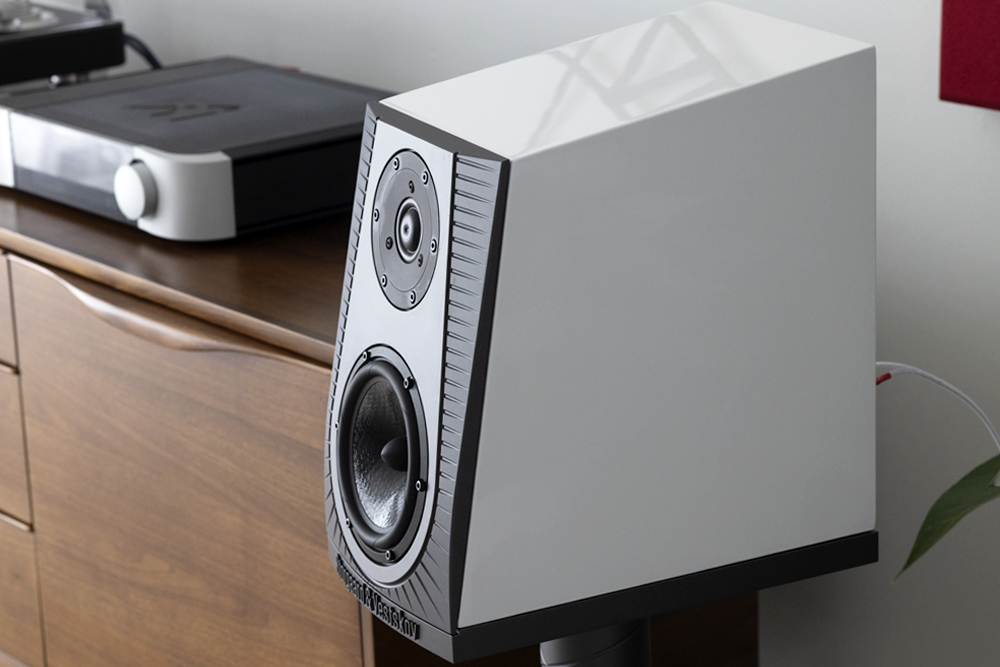
The company rates the Frida’s sensitivity at 88dB, though without specifying voltage or wattage reference, or whether that figure is in-room or anechoic. We haven’t measured a Frida yet, but because I needed to set the 371’s volume control several clicks higher than with the 1610 Tower 8s, I suspect 84 or 85dB may be more realistic. Nevertheless, I wouldn’t necessarily want more power for the Fridas—I still didn’t go beyond 65 on the volume, mostly because I didn’t want to overdrive them—nor would I place them in a room larger than my living room, because this is a smaller speaker intended for a smaller room. For bigger rooms, the company offers two larger floorstanding models.
It was with this pair that I observed notable midrange-woofer excursion while reproducing the bass on “Copper and Violet,” the opening track of C/O the Brain. The Fridas produced bass output below 40Hz, which is impressive for speakers of this size, but with almost violent cone movements when doing so. I don’t necessarily fault the speakers—a rumble filter in the 371’s phono stage would’ve likely helped—but it was visually concerning.
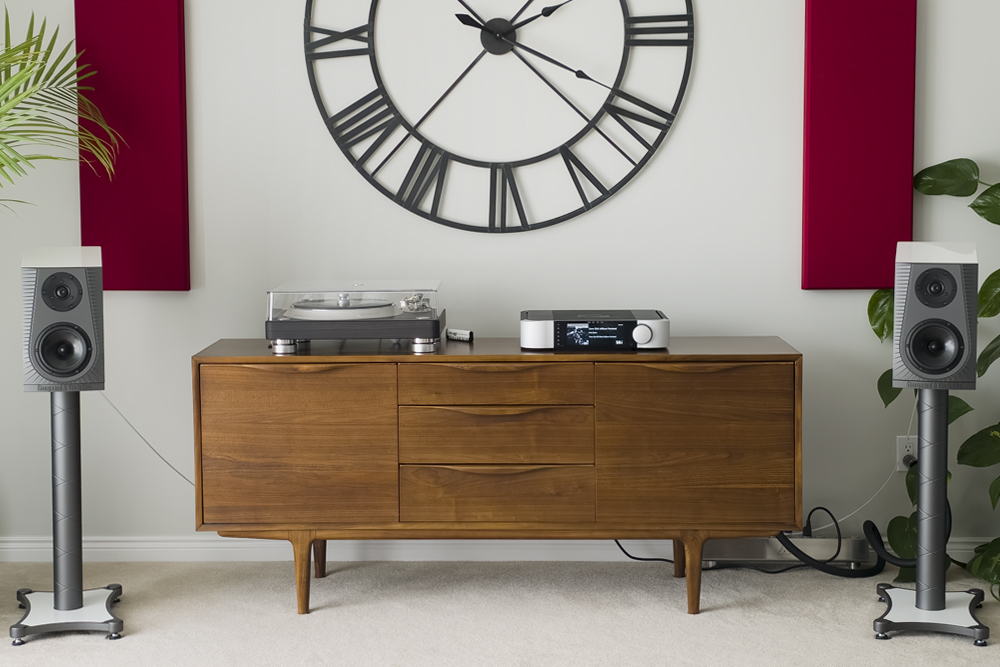
Sonically, there wasn’t an issue. In fact, at times what I heard was stupendous. On “Copper and Violet,” Verrall’s vocals had a richness that made the 1610s sound slightly dry by comparison. Likewise, when streaming Bruce Cockburn’s “Pacing the Cage” from Qobuz, his voice emerged from the center of the soundstage with such fullness and presence you’d swear there were tubes somewhere in the signal chain. On that album’s title track, “The Charity of Night,” I heard bass weight that belied the speakers’ diminutive size, a wonderfully wide soundstage, and clean highs that were prominent enough but never bright. A pair of Fridas is almost three times the price of the 371, but I’d have no trouble recommending this combination.
Moon 371 vs. T+A R 2500 R
It was with the Fridas that I compared T+A’s R 2500 R, which I wrote about in March 2025, to the Moon 371. It’s a particularly relevant comparison because T+A’s intent with this amplifier mirrors Simaudio’s with the Moon 371—packing plenty of features into a décor‑friendly design without losing true hi-fi performance. In that regard, the R 2500 R is something of a reference, given all it provides. Also, unlike many competing products that are built overseas in third‑party factories to keep costs down, both of these units are manufactured in their companies’ own facilities in their home countries. In T+A’s case, that’s Germany.
Feature‑wise, the R 2500 R pulls ahead of the 371 by adding an FM/DAB tuner and a CD transport. It, too, uses a class‑AB power amplifier fed by a switch‑mode power supply, but it’s rated to deliver a little more power: 140Wpc into 8 ohms or 250Wpc into 4 ohms.
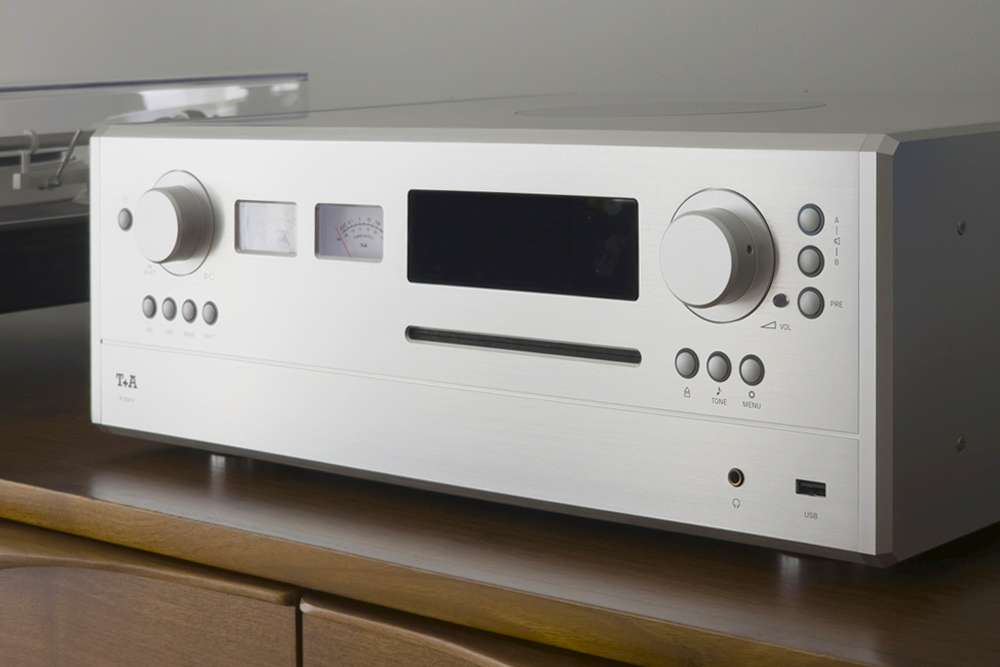
The R 2500 R’s DAC section offers more inputs, including USB, and provides two discrete conversion pathways for PCM and DSD. PCM is handled by four 32‑bit Burr‑Brown converters per channel, while DSD uses T+A’s proprietary 1‑bit architecture. In the 371, they’re both handled in the ESS chip. For both PCM and DSD, the R 2500 R has multiple selectable filters. I’m rarely enthusiastic about filter options in digital products—I tend to think designers should simply choose the one that best suits their design and leave it at that, like Simaudio did with the 371—but in this case T+A includes some Bézier‑type filters that are unique to the company, so I don’t mind being offered the choice.
T+A’s control app—Music Navigator 3—offers functionality similar to Simaudio’s MiND platform, and I couldn’t pick a clear winner between them in terms of intuitiveness. The T+A also supports AirPlay, Spotify Connect, Tidal Connect, and Qobuz Connect, which is what matters most to me. It’s also Roon Ready.
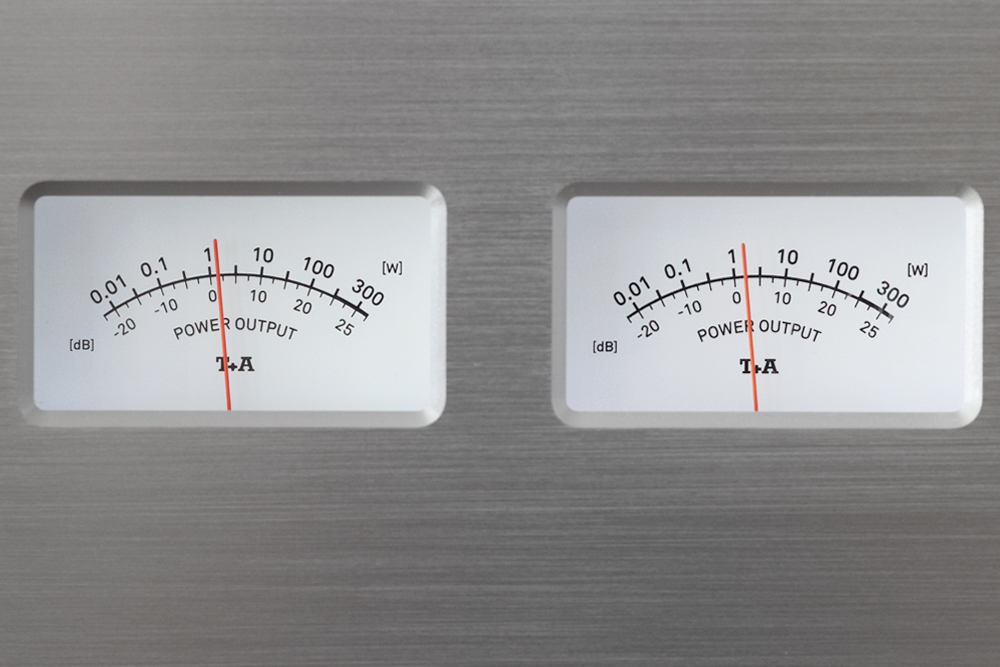
The downside with the R 2500 R is that it’s much larger—about twice the height—and it doesn’t have a large, full‑color display like the 371 has. Instead, it uses a small text screen that’s readable enough and shows configuration options well but doesn’t show album art—only album names and song titles in text. For many, that’s probably a negative. However, the R 2500 R has a visually striking feature in the funky VU meters on its front panel, which give it a retro vibe that some will like.
But now it’s time to talk price: in the US, the R 2500 R’s base price is $19,900 without a phono stage, and another $1090 with one, but you have to also choose moving‑magnet or moving‑coil. All told, that’s more than three times the price of the 371. Is it worth it?
Sonically, when streaming my reference music, I found it nearly impossible to tell the two apart. And the small increase in power you get with the R 2500 R didn’t make much difference with the Fridas—nor would it with most speakers. To achieve just a 3dB increase in output from a speaker you need to double the amplifier power. The difference between 100W and 140W amounts to only 1.46dB. All told, both amplifiers drove the Fridas to the volume levels I required without strain. Any sonic differences I noticed while streaming from Qobuz occurred only when cycling through the T+A’s filters—and even then the changes were subtle at best. (In our lab, at the 1% THD threshold, the Moon delivered 145Wpc into 8 ohms and 264Wpc into 4 ohms, while the T+A delivered 152Wpc into 8 ohms and 278Wpc into 4 ohms—so their real-world power capabilities are much closer than their specifications suggest.)
When my R 2500 R review unit was sent, I made sure it was fitted with the moving‑coil phono option. The 371’s phono stage is excellent, but so is the R 2500 R’s, which provided sufficient gain, noise about as low, and similar accuracy. The R 2500 R allows adjustments for impedance and capacitance, though I left those at the factory defaults (which I didn’t even check, since you have to open the unit to access them). Once again, there were no notable sonic differences to speak of. That makes the 371 a helluva deal.
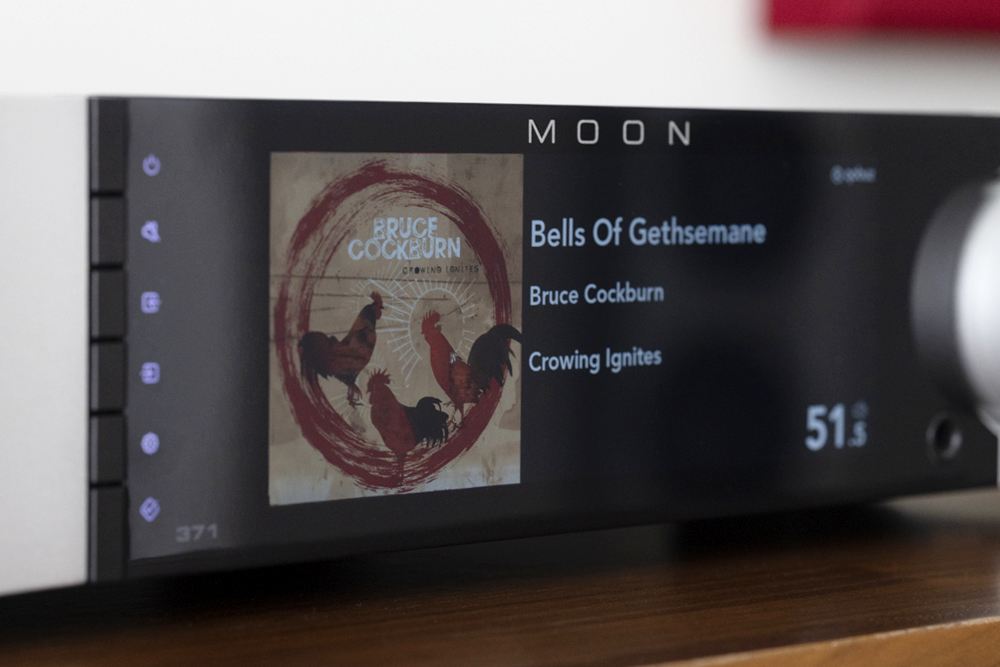
But not so fast: I’ll admit that I have a soft spot for the R 2500 R’s additional features. I’ve made use of both the CD transport and the tuner fairly often, so they’re nice to have, though these days not everyone is going to use those. I also like that the T+A has been designed for users to get at most of its features through the plethora of buttons on its front panel, putting less reliance on scrolling through the onscreen menu (or through the app) than the 371. But after living with the 371 and appreciating its color display, I did find myself wishing the T+A had one instead of its small text screen. Then again, if it did, its price would likely climb even higher than it already is.
In the end, the R 2500 R offers slightly more power than the Moon 371, but in practice the two sound alike. Paying more than three times the price does not bring a proportional increase in sound quality—it buys additional features. Both amplifiers pursue the same modern goal: to combine substantial functionality with genuine hi‑fi performance in a single, décor-friendly component. The T+A succeeds by offering an unusually rich feature set—arguably unmatched in this category—while the Simaudio focuses on delivering similar sonic performance in a more compact, more streamlined, and far more affordable package. That contrast ultimately underscores just how compelling the Moon 371’s value proposition is.
Modernized Moon
After living with the Moon 371 across multiple systems and environments, what stands out most is not any single feature but the coherence and value of the overall concept. Simaudio has created an integrated amplifier that successfully compresses what once required several components—preamplifier, power amplifier, DAC, streamer, and phono stage—into one compact chassis without introducing the sonic compromises that traditionally accompanied such consolidation, which is not unlike what I said they achieved with the 791 preamplifier when I reviewed it.
Its power output will not suffice for very demanding loudspeakers in very large rooms, nor was it designed to. Within the more typical spaces and system contexts for which it is intended, however, the 371 is capable, composed, and musically convincing. Whether driving substantial floorstanders at realistic listening levels or partnering with more modest speakers in a living‑room setting, it maintains clarity, control, and tonal integrity without being stressed.
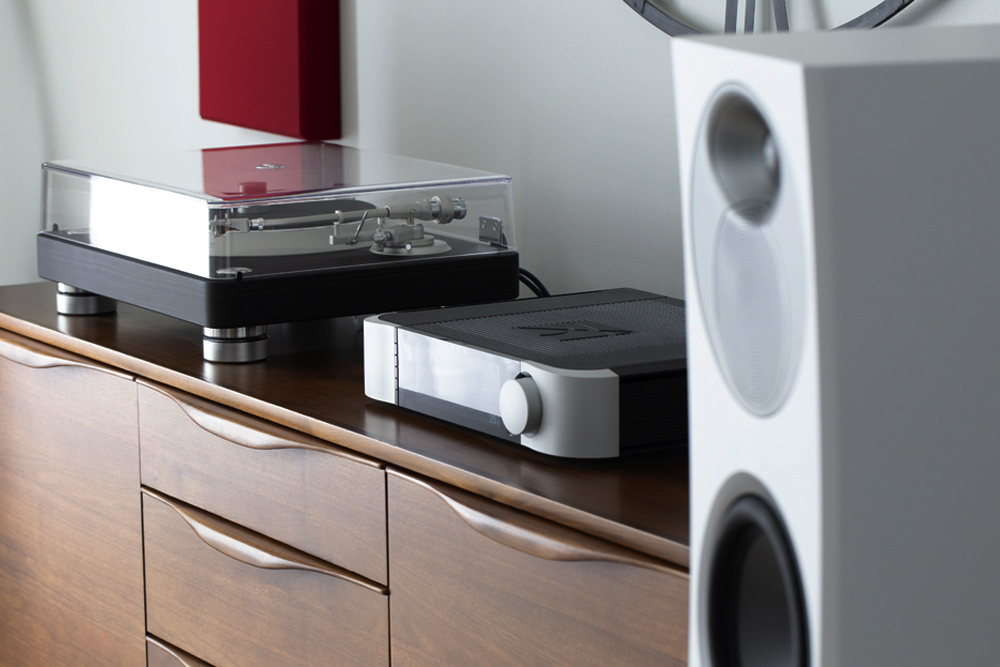
The result is an integrated amplifier that feels thoroughly modern—not only because of its feature set, but also because of how intelligently those features are implemented. Built entirely in Canada and backed by a ten‑year warranty, the Moon 371 offers a compelling blend of performance, practicality, and long‑term value. For listeners seeking to simplify their systems without surrendering serious hi‑fi credibility or for those looking to build up a great system and find an anchor for it, the 371 is a feature-rich amplification centerpiece that can provide stellar sonic performance likely to last through many iterations of speaker or turntable upgrades. It’s what I like to call a keeper component.
. . . Doug Schneider
das@soundstage.com
Note: for the full suite of measurements from the SoundStage! Audio-Electronics Lab, click here.
Associated Equipment
- Loudspeakers: Arendal Sound 1528 Tower 8, Arendal Sound 1610 Tower 8, SV‑Audio Frida
- Turntable: Denon DP‑3000NE turntable with Denon DL‑103o cartridge
- Preamplifiers: Simaudio Moon 791, Anthem STR
- Power amplifier: Simaudio Moon 761
- Integrated amplifier: T+A R 2500 R
- Streamer: Bluesound Node Icon
- Speaker cables: QED XT25, QED Supremus
- Analog interconnects: Crystal Cable Standard Diamond
- Power cords: Shunyata Research Venom HC
- Power distributor: Shunyata Research PS8
- Acoustical treatments: BXI Sound Absorber panels (20), Tönnen Sound panels (2)
Simaudio Moon 371 streaming integrated amplifier
Price: US$6500, CA$8800, £6250, €6800
Warranty: Ten years, parts and labor
Simaudio Ltd.
345 Rue Newton
Boucherville, QC J4B 5H2
Canada
Phone: (450) 449-2212
Email: info@simaudio.com
Website: www.simaudio.com